Quick answer
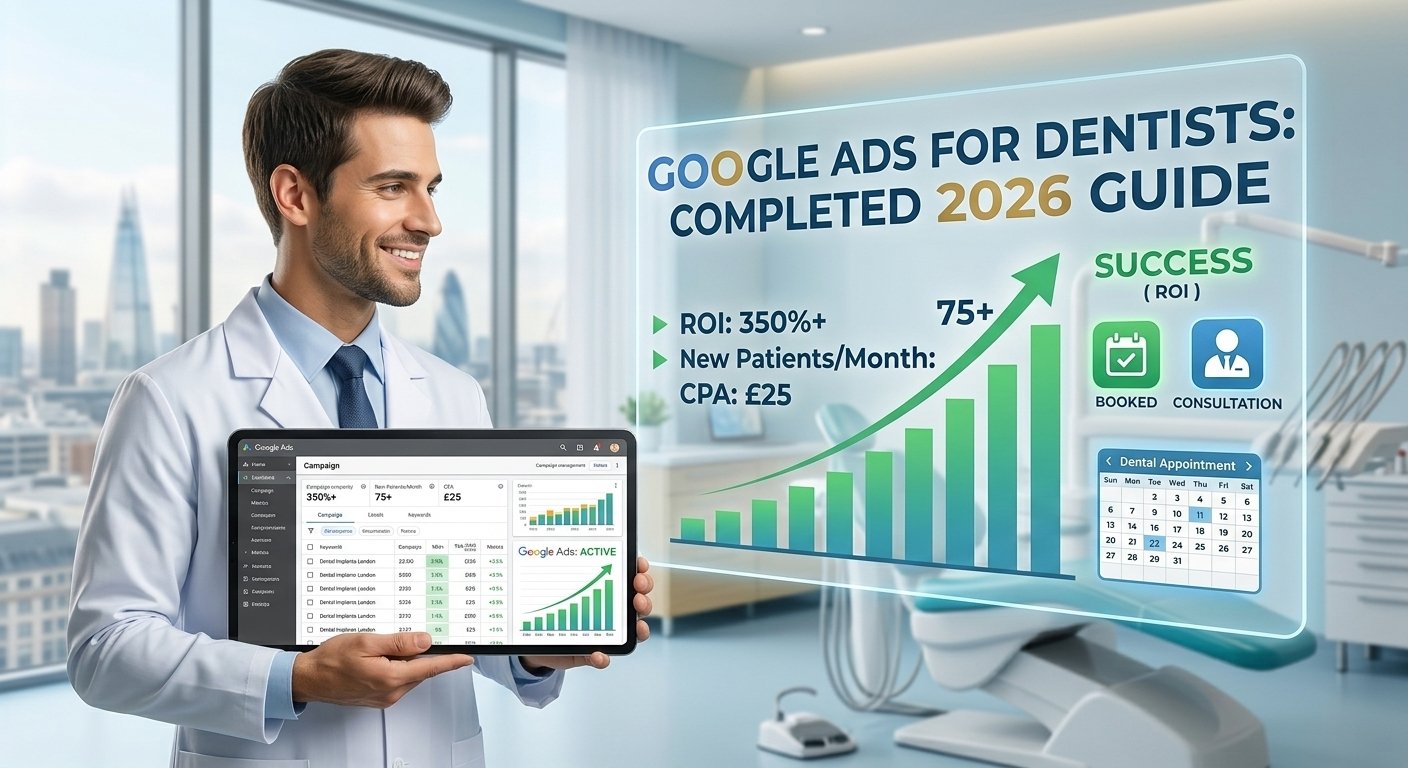
Google Ads works well for dentists because it puts your practice in front of people actively searching for treatment right now. Most UK practices start with a budget of £500 to £1,500 per month plus management, target high-value treatments like implants and Invisalign, and send clicks to a dedicated landing page rather than the homepage. Done right, it’s the fastest way to generate new-patient enquiries.
SEO builds long-term visibility, but it takes months. When a practice needs enquiries now, Google Ads is the fastest lever available — you can be in front of patients within hours of launching. The catch is that Ads is also the easiest way to waste money if it’s set up badly. This guide covers how to run profitable dental PPC in 2026.
Why do Google Ads work so well for dentists?
Because they intercept intent. When someone types “dental implants near me” or “emergency dentist”, they’re ready to act. Google Ads places you at the very top of those results. The key advantages for dentists:
- Speed: leads can start on day one, unlike SEO.
- Control: you choose the treatments, areas, and budget.
- Measurability: every pound is tracked to clicks, calls, and bookings.
- High intent: you’re reaching people actively looking for a dentist, not interrupting them.
How much should a dentist spend on Google Ads?
Most UK practices start between £500 and £1,500 per month in ad spend, plus a management fee. The right number depends on your treatments and area:
- Routine treatments (check-ups, hygiene) have a lower cost-per-click but also lower case value.
- High-value treatments (implants, Invisalign, full-mouth work) cost more per click but return far more per patient, so they justify a bigger budget.
- Competitive cities push click costs up, so budgets need to be higher to see consistent volume.
To decide how Ads fits alongside your other channels, see how much a dental practice should spend on marketing.
Want leads this month, not next quarter? Ask about our dental Google Ads management in a free strategy call.
How should a dental Google Ads campaign be structured?
A profitable dental campaign is organised around treatments, not one giant catch-all. Best practice in 2026:
- Separate ad groups per treatment so ads and landing pages match the search (implants, Invisalign, whitening, emergency, general).
- Tight keyword match types and a strong negative keyword list to stop wasted spend on irrelevant searches (like job seekers or DIY queries).
- Location targeting set to a realistic radius around your practice.
- Ad extensions — call buttons, location, and sitelinks — to lift visibility and click-through.
- Performance Max used carefully as a supplement, not a replacement for targeted search campaigns.
Where should dental ads send clicks?
Never to your homepage. Send each ad to a dedicated landing page built around that treatment, with a clear headline, trust signals, and an obvious way to book or call. Sending paid traffic to a generic homepage is one of the biggest reasons dental campaigns lose money — if your pages don’t convert, read why your dental website isn’t getting leads.
How do you track whether Google Ads is working?
Set up conversion tracking before you spend a penny. You need to measure:
- Phone calls from the ad and the landing page (call tracking).
- Form submissions as conversions in Google Ads and GA4.
- Cost per lead and, ideally, cost per booked patient.
Without tracking, you’re flying blind and can’t tell which treatments and keywords actually make money.
Should dentists use Google Ads or Facebook Ads?
They do different jobs. Google Ads captures people already searching for treatment (demand capture), while Facebook and Meta ads for dentists create demand cheaply for cosmetic treatments. The strongest practices run both, and combine them with dental SEO for long-term, lower-cost leads.
Ready to turn on a steady flow of new-patient enquiries? Get a free audit of your ads setup and landing pages.
Frequently asked questions
Are Google Ads worth it for dentists?
Yes, when tracked to booked patients. One implant or Invisalign case can cover months of ad spend, and Ads deliver enquiries far faster than SEO.
How much should a dentist spend on Google Ads?
Most UK practices start at £500 to £1,500 per month in ad spend plus management, with higher budgets for high-value treatments and competitive cities.
Which is better for dentists, Google Ads or Facebook Ads?
Google Ads captures people already searching for a dentist, while Facebook and Meta ads create demand cheaply for cosmetic treatments. Most practices get the best results using both.
Where should dental Google Ads send traffic?
To a dedicated landing page for that treatment with a clear call to action, never to a generic homepage, which wastes ad budget.