Quick answer
To show up in AI results, a dental practice needs to be a clear, well-structured entity with strong reviews and consistent citations that AI models trust. That means tidy schema markup, answer-first content, a fully optimised Google Business Profile, and mentions on authoritative sites. AI SEO builds on normal SEO — the same foundations, plus the structure and consistency that make AI confident enough to recommend you.
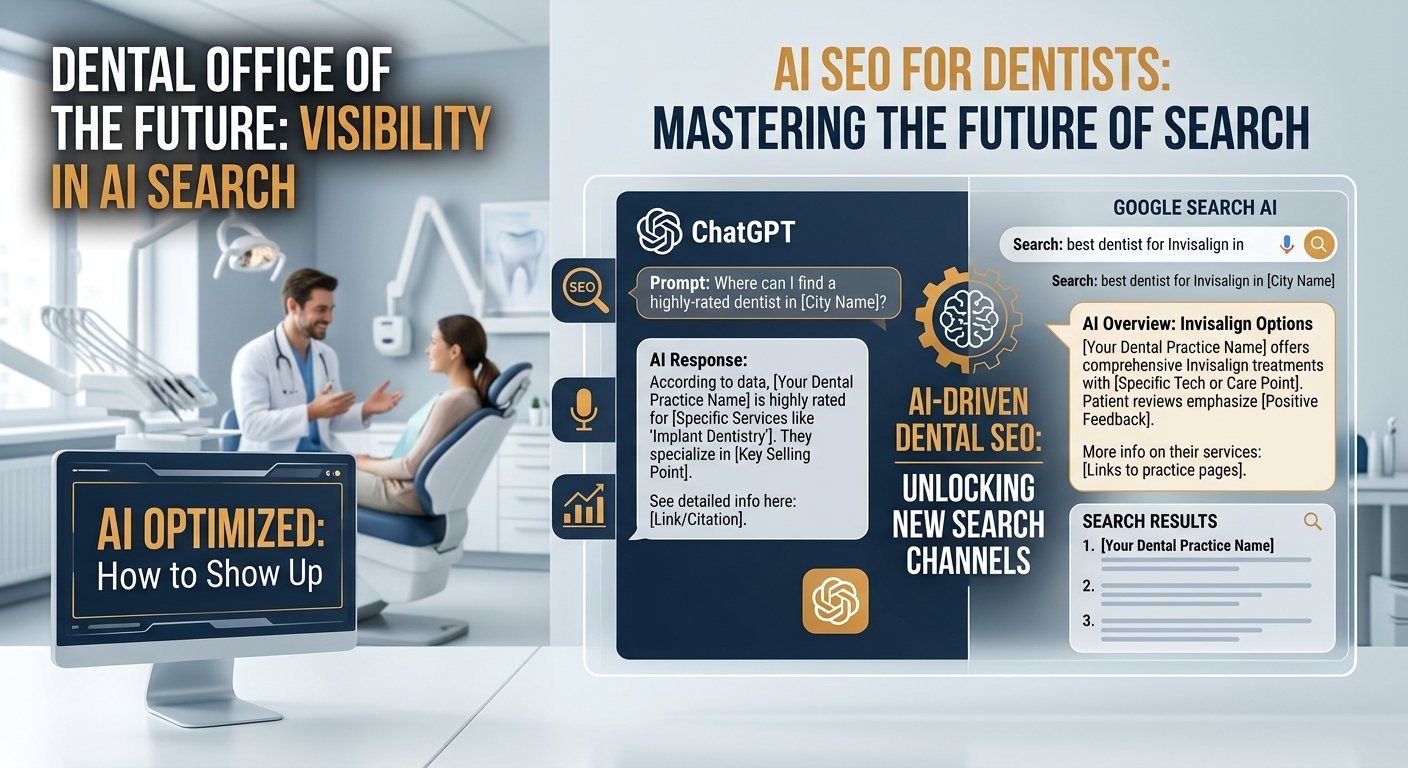
Search has quietly changed. More patients now open ChatGPT or Gemini and ask “who’s the best dentist in [town]?” — and Google increasingly answers with an AI Overview sitting above the normal results. If AI doesn’t know you, or gets you wrong, you’re invisible at the exact moment a patient is choosing. AI SEO is how you make sure the models recommend your practice. Few UK dental sites are doing this yet, which is exactly the opportunity.
How has search actually changed?
Two shifts matter for dentists. First, patients are asking conversational AI tools for recommendations instead of scrolling a list of links. Second, Google now generates AI Overviews that summarise an answer and cite a handful of sources. In both cases, the practice that gets named or cited wins the patient — and the ones that don’t never get seen.
How does AI decide which practice to recommend?
AI models pull from the clearest, most consistent, most trusted information they can find. For a dental practice that comes down to:
- Entity clarity: a consistent, unambiguous identity — same name, address, and details everywhere.
- Structured data: schema markup that spells out who you are, what you treat, and where.
- Consistent citations: your practice referenced the same way across directories and trusted sites.
- Authoritative content: clear, answer-first pages that models can quote directly.
- Reviews: a strong, recent review profile that signals trust.
What’s the AI SEO checklist for dentists?
- Schema markup for Dentist and LocalBusiness, so models read your details correctly.
- Answer-first FAQ content that directly answers the questions patients ask AI.
- An llms.txt file and clean, crawlable content structure.
- A strong review presence across Google and trusted platforms.
- Citations on trusted sites so AI has corroborating sources.
Most of this sits on top of solid dental SEO fundamentals — get those right first, then layer AI on top.
How do you measure AI visibility?
Test it directly. Run the same prompts a patient would — “best dentist in [town]”, “[your practice name] reviews”, “where can I get Invisalign in [town]” — across ChatGPT and Gemini, and track whether you’re mentioned and whether the details are right. It’s worth checking regularly, because the answers change. We go deeper on this in what AI says about your practice, and on the strategy behind it in generative engine optimisation explained. For the done-for-you version, see our AI SEO for dentists service.
Frequently asked questions
How do dentists show up in ChatGPT results?
By being a clear, well-structured entity with strong reviews and consistent citations that AI models trust and reference.
Is AI SEO different from normal SEO?
It builds on it — the same foundations, plus structured data, entity consistency, and content written to be quoted by AI.
What is AI SEO for dentists?
It’s optimising a practice’s online presence so AI tools like ChatGPT, Gemini, and Google AI Overviews recommend and cite it to patients.
Do AI Overviews affect dental practices?
Yes. AI Overviews sit above the normal results, so practices cited in them capture attention before a patient reaches the standard listings.