
Quick answer
To get more patients from Google, a dentist should optimise their treatment pages, win the local map pack, collect reviews consistently, publish local content, and keep the site fast on mobile. These five moves cover the way patients actually search — and while the basics can be done in-house, competitive rankings usually need specialist help.
Every day, people in your area type “dentist near me” or “Invisalign [town]” into Google and book with whoever shows up first. SEO is simply how you make sure that’s you. This is a practical playbook — the specific moves that turn searches into booked appointments, and an honest look at what you can do yourself versus what’s worth handing over.
What does the patient journey on Google look like?
It’s shorter than most dentists think. A patient searches, scans the map pack and the first couple of results, checks reviews and star ratings, then clicks and calls. The whole thing can take under a minute. SEO intercepts that journey at every step — showing up in the results, earning the click with strong reviews, and landing them on a page that makes booking easy.
What are the 5 SEO moves that actually get patients?
- Optimise your treatment pages: a dedicated, well-written page for each treatment you want more of, targeting how patients phrase it.
- Win the map pack: a fully optimised Google Business Profile is the single fastest lever for local visibility.
- Collect reviews consistently: volume, recency, and rating all influence rankings and clicks.
- Publish local content: pages and posts that mention your areas and answer real patient questions.
- Fix your site speed: a slow, clunky mobile site loses patients before they book.
For the full framework behind these moves, see the complete dental SEO guide.
Which keywords do patients actually search?
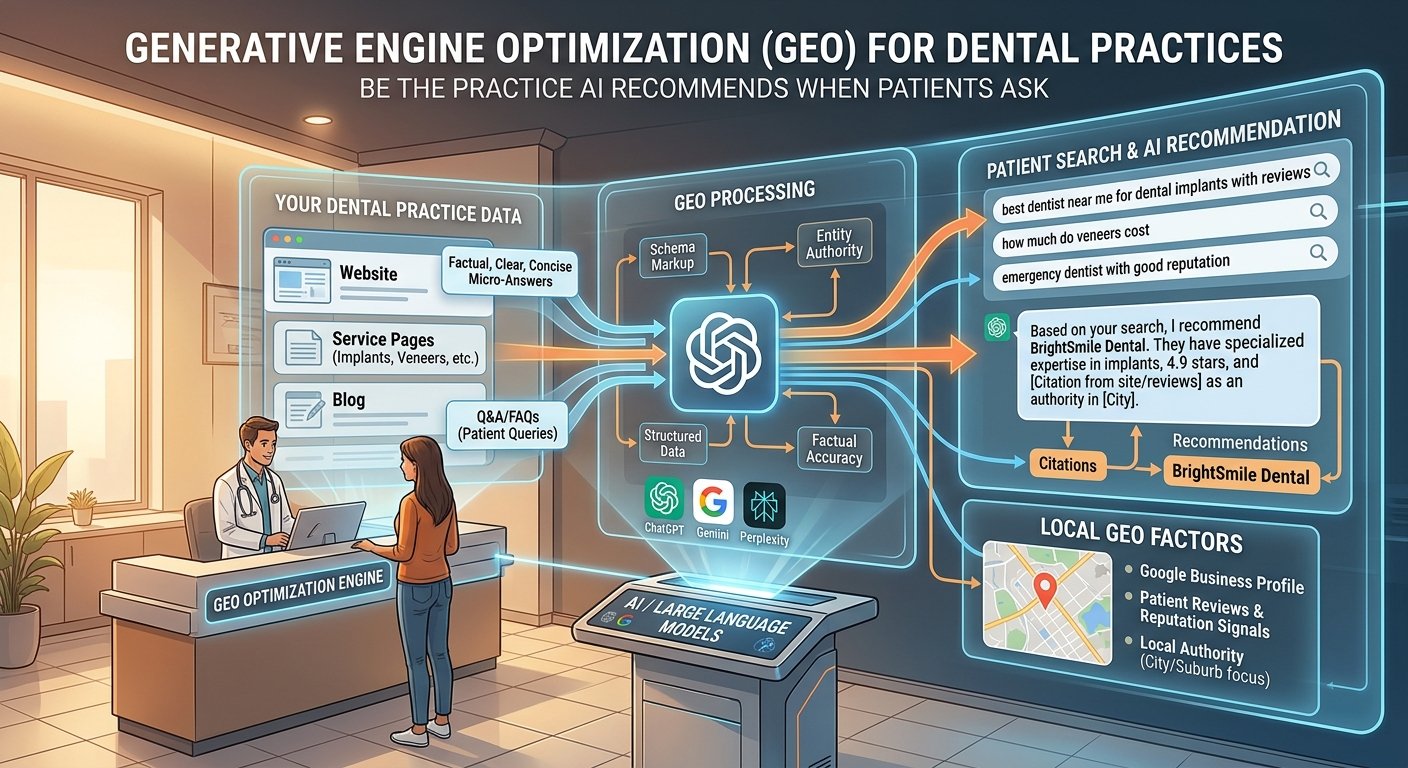
Mostly treatment-plus-location combinations — “teeth whitening Leeds”, “dental implants near me”, “emergency dentist [town]” — plus question-style searches that AI tools now answer, like “how much are veneers in the UK”. Map these to specific pages rather than trying to cram them onto your homepage.
DIY vs done-for-you: what should a dentist handle themselves?
You can do the foundations in an afternoon — claim and tidy your Google Business Profile, ask happy patients for reviews, and make sure your contact details are consistent everywhere. What usually needs a specialist is the competitive stuff: technical fixes, treatment-page optimisation at scale, links, and staying ahead of competitors who are also investing. The honest rule of thumb is that dental SEO services earn their fee when the treatments are high-value and the local competition is real. It’s also worth optimising your Google Business Profile and getting more Google reviews as your first two priorities.
Frequently asked questions
Can a dentist do SEO themselves?
The basics, yes — Google Business Profile, reviews, and on-page tidy-ups. Competitive rankings and technical fixes usually need specialist help.
What’s the fastest SEO win for a dental practice?
Optimising and actively managing your Google Business Profile — it drives map-pack visibility faster than anything else.
How do dentists get more patients from Google?
By optimising treatment pages, ranking in the local map pack, collecting reviews, publishing local content, and keeping the site fast on mobile.
How long before SEO brings in new patients?
Local map-pack gains can appear within weeks, while competitive organic rankings typically take three to six months to build.